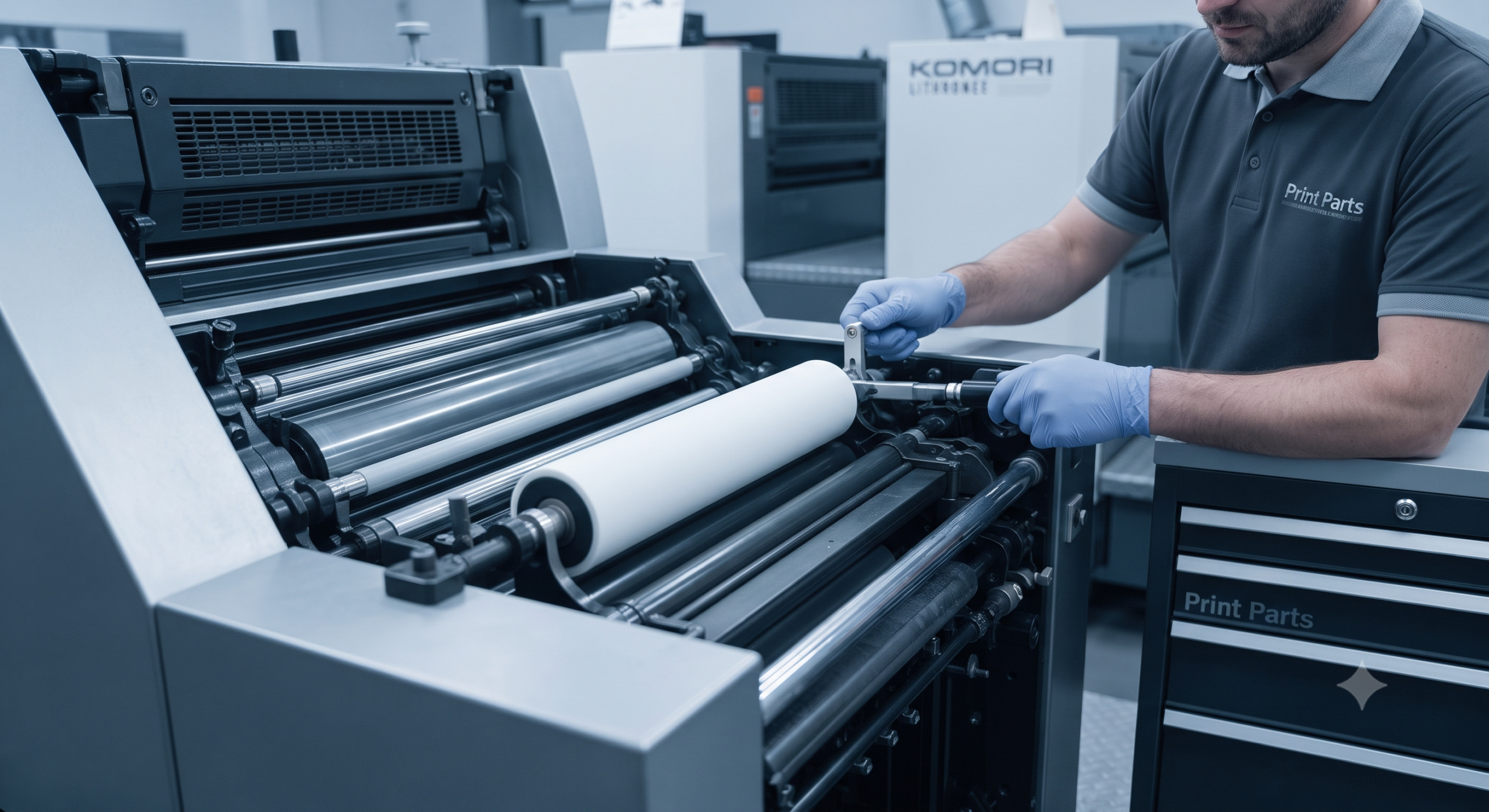
In the high-speed world of offset lithography, ink and dampening rollers are the heartbeat of your press. Whether you are running a heavy-duty Heidelberg Speedmaster, a precision Komori, or a high-performance Lithrone, even a minor roller defect can immediately trigger print defects—such as stripping, ghosting, slurring, or uneven ink distribution—leading to costly production downtime.
At Print Care Parts Enterprises, we help print shops across India maintain peak press performance by supplying durable, precision-engineered components and maintenance solutions. Based on frequent shop-floor challenges, here is a breakdown of the top 5 common offset roller issues and the practical steps you can take to prevent them.
Summary: Top 5 Offset Roller Issues & Quick Solutions
| # | Common Issue | Primary Root Cause | Prevention & Solution |
| 1 | Roller Glazing & Stripping | Dried ink, Master plate gum, and paper dust buildup on the roller surface. | Regular chemical deep cleaning; use dedicated roller washes and reconditioners. |
| 2 | Roller Swelling & Delamination | Incompatible wash-up solvents or harsh cleaning chemicals reacting with rubber compounds. | Switch to OEM-approved, low-aromatic wash solvents and monitor immersion times. |
| 3 | Bearing Seizure & Roller Vibration | Lack of lubrication, worn-out bearings, or excessive axial load. | Inspect and replace worn bearings; explore our Mechanical Parts Catalog for replacements. |
| 4 | End-Wear & Edge Cracking | Incorrect roller pressure setting (over-packing or uneven nip width). | Calibrate roller-to-plate and roller-to-roller pressures using the strip method monthly. |
| 5 | Thermal Degradation & Melting | High friction buildup caused by improper roller setting or excessive press speeds. | Check roller contact settings, optimize dampening balance, and replace degraded rollers with high-grade stock. |
Detailed Section: Issues, Root Causes, and Preventative Solutions
1. Roller Glazing and Ink Stripping
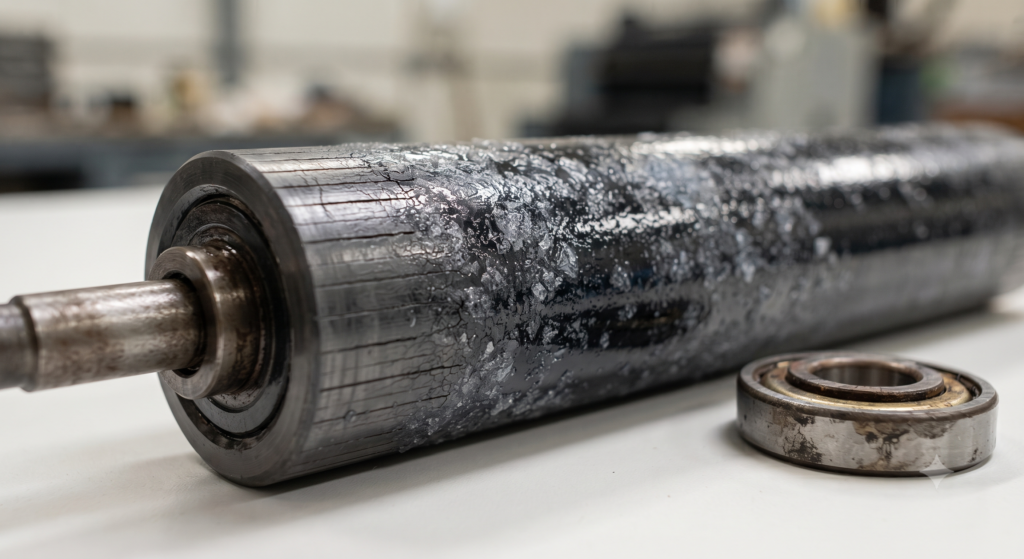
- The Problem: Over time, ink resins, calcium deposits from paper, and gum Arabic film accumulate on the roller surface, creating a smooth, shiny, non-porous layer (glazing). When rollers glaze, they lose their ability to accept and transfer ink uniformly, causing ink stripping and washed-out prints.
- The Root Cause: Inadequate daily wash-up routines, hard water usage in the dampening system, or using improper wash chemicals that fail to strip microscopic paper filler residues.
- The Prevention & Solution: * Implement a strict end-of-shift cleaning protocol using specialized calcium-removal pastes and approved roller washes.
- Periodically deep-clean your ink train to strip away dried micro-layers. For auxiliary maintenance tools and upkeep items, browse our collection of Printing Machine Spare Parts & Consumables.
2. Roller Swelling, Softening, and Chemical Attack
- The Problem: Rubber rollers begin to lose their dimensional stability, growing swollen at the ends or turning overly soft and tacky. This distorts the nip width and ruins print registration.
- The Root Cause: Using cheap, aggressive, or non-compatible wash-up solvents that penetrate the rubber compound, breaking down its polymer bonds. Prolonged contact with certain aggressive UV inks or cleaning agents can also accelerate breakdown.
- The Prevention & Solution: * Always cross-check your wash-up solvents against OEM specifications for your Heidelberg, Komori, or Lithrone press.
- Ensure wash-up blades are properly adjusted so solvents do not pool on the roller ends during automatic or manual washing cycles.
3. Bearing Failure and Mechanical Vibration
- The Problem: A rattling noise coming from the ink train, accompanied by linear streaks or banding across printed sheets. This is usually caused by failing roller journal bearings.
- The Root Cause: Contamination from ink mist and wash solvents entering the bearing seals, coupled with a lack of routine greasing or running rollers with excessive side-load pressure.
- The Prevention & Solution: * Inspect roller journals and bearings during scheduled quarterly maintenance.
- Never let a worn bearing damage your expensive roller shafts. Keep precision replacements on hand by browsing our selection of high-grade components in the Bearing Category. A smooth-spinning roller starts with a healthy bearing foundation.
4. End-Wear and Edge Cracking
- The Problem: Chipping, cracking, or severe rubber breakdown restricted to the outer edges (ends) of the rollers, often exposing the metal core.
- The Root Cause: Excessive pressure settings (over-packing) where the rollers are jammed too tightly against steel cylinders or adjacent rollers. Edge friction multiplies exponentially under improper nip settings.
- The Prevention & Solution: * Use the standard “ink stripe test” (nip width gauge) whenever installing freshly reground or new rollers.
- Ensure that roller setting gauges match the manufacturer manuals for Heidelberg and Komori presses. Adjust side settings carefully to prevent edge-pinching.
5. Thermal Degradation and Roller Melting
- The Problem: Rollers soften catastrophically or crack mid-run due to extreme heat generation inside the ink train, especially during high-speed, long-run commercial jobs.
- The Root Cause: Excessive friction caused by two rollers set too tightly against each other, or poor cooling and water circulation in the press dampening system.
- The Prevention & Solution: * Double-check roller contact pressures to eliminate friction-induced heat.
- Monitor fountain solution temperatures closely. If your press requires specialized electrical monitoring or temperature controls to prevent overheating, check out our Electrical Parts Collection for reliable auxiliary units.
Conclusion
Maximizing the lifespan of your offset rollers in a Heidelberg, Komori, or Lithrone press isn’t just about cleaning—it is a combination of disciplined daily maintenance, correct chemical usage, and prompt replacement of worn mechanical parts. By catching minor issues like bearing wear or roller glazing early, you protect your print quality and eliminate unexpected press downtime.
Need expert guidance or looking for specific replacement parts for your offset press? Visit our Print Parts Homepage or connect directly with Print Care Parts Enterprises in Bengaluru for quick dispatch and trusted technical support across India.
#MaintenanceBlog #OffsetPrinting #PrintCareParts #MachineMaintenance #SouthIndiaBusiness